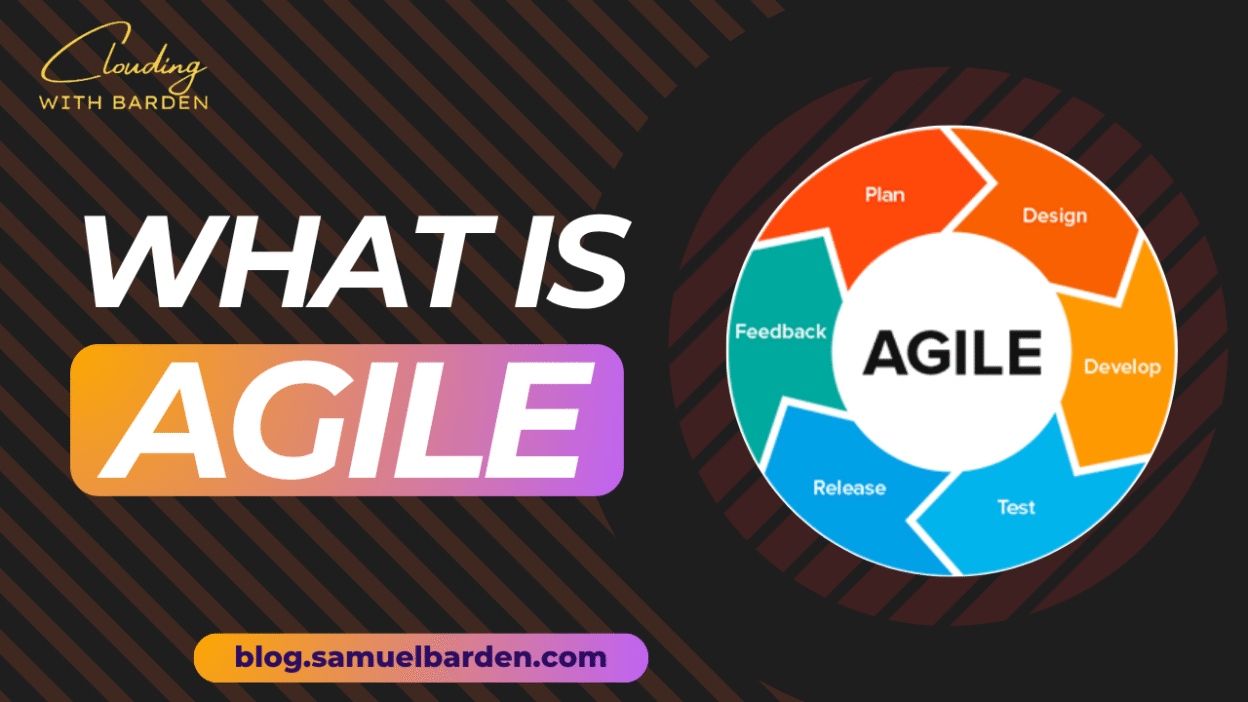
Agile began as a reaction to the limitations of traditional project management methods, especially the waterfall model. In waterfall, progress is organized into sequential stages: requirements, design, implementation, testing, and deployment. Each stage depends on the one before it, so a mistake early on or a change in requirements can derail months of work. It works well when requirements are stable and predictable, but many teams discovered that software development rarely fits this description.
In 2001, a group of practitioners drafted the Agile Manifesto. This document distilled years of frustration into four values and twelve principles that emphasized adaptability, collaboration, and continuous delivery. Agile is not a single framework or toolset. It is a philosophy of work, supported by methods such as Scrum, Kanban, and Extreme Programming, each offering its own practices to embody these values.
Agile vs Waterfall
The distinction between waterfall and agile lies in how work flows.
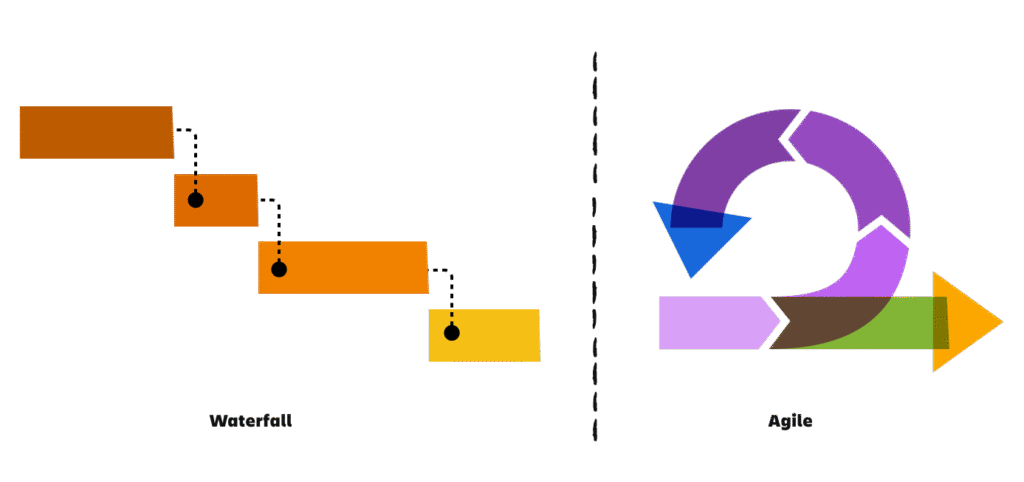
- Waterfall assumes that if we can capture all requirements at the start and follow a carefully designed plan, we will arrive at the correct solution. Progress is linear, moving from one stage to the next until a final product emerges.
- Agile assumes that requirements will change, and that knowledge evolves as the work progresses. Instead of waiting until the end for a single deliverable, teams ship in small increments. Each increment is an opportunity to validate assumptions, learn from feedback, and adjust the plan.
Agile does not reject planning. It rejects rigid planning. The point is not to eliminate structure but to make it responsive.
The Four Values of Agile
The manifesto is short—68 words in its original form—but the values it sets out remain central to how teams work today.
- Individuals and interactions over processes and tools
Tools can help a team coordinate, but collaboration is driven by people talking to each other. A process without genuine communication becomes brittle. Agile encourages teams to optimize for meaningful interaction rather than compliance with a rigid workflow. - Working software over comprehensive documentation
The best way to know if a system works is to put it in the hands of users. Agile teams prefer delivering something functional, even if incomplete, over waiting until every feature is “finished” before release. The same applies outside software: progress is measured by tangible outcomes, not the volume of specifications produced. - Customer collaboration over contract negotiation
Traditional projects often fix scope up front and measure success by whether that scope was delivered. Agile instead treats customers as ongoing partners. Their feedback shapes what gets built next. This creates alignment between what the team is doing and what customers actually need. - Responding to change over following a plan
Plans are useful starting points. But markets shift, users behave differently than expected, and new constraints emerge. Agile assumes this reality. The most effective teams are those that anticipate change, accept it as inevitable, and use it to improve their product.
Agility in Practice
Agile is more than adopting a methodology like Scrum or Kanban. Those frameworks help structure work, but the deeper change is cultural. An agile team focuses on outcomes, not output. It prioritizes frequent delivery, real feedback, and continuous improvement.
Being agile also requires discipline. Short iterations are only valuable if the team can reliably deliver something of quality in each cycle. Flexibility is only productive if there is transparency around priorities and progress.
Over time, the practices of agile—stand-ups, backlog refinement, retrospectives, and incremental releases—reinforce its mindset. Teams learn to break down large goals into smaller, testable increments. They become more comfortable discarding work that no longer matters. And they build resilience into their way of working by expecting change rather than fearing it.
Beyond Software
Although agile originated in software, its principles apply widely. Marketing teams, legal departments, and even government agencies have adopted agile practices to handle complex, uncertain work. What matters is not the industry but the nature of the work: if outcomes depend on learning as you go, agile offers a more effective way forward than trying to predict everything at the outset.
Closing
Agile is best understood not as a checklist but as a set of guiding principles. Frameworks and tools may evolve, but the core idea remains the same: reduce the distance between effort and feedback, value collaboration over rigid control, and embrace change as a source of improvement.
The manifesto’s opening line summarizes the intent well: “We are uncovering better ways of developing software by doing it and helping others do it.” The uncovering never stops.
Stay Clouding!